The Quiet Shift from Computation to Comprehension
Today’s AI developments suggest we are moving past the era of simple chatbots and into a phase where artificial intelligence is fundamentally restructuring how we process complex information, whether that is through high-level mathematics or the fine print of a legal contract. It is a day marked by significant integration—bringing powerful large language models directly into the hardware and software we use for our most demanding work.
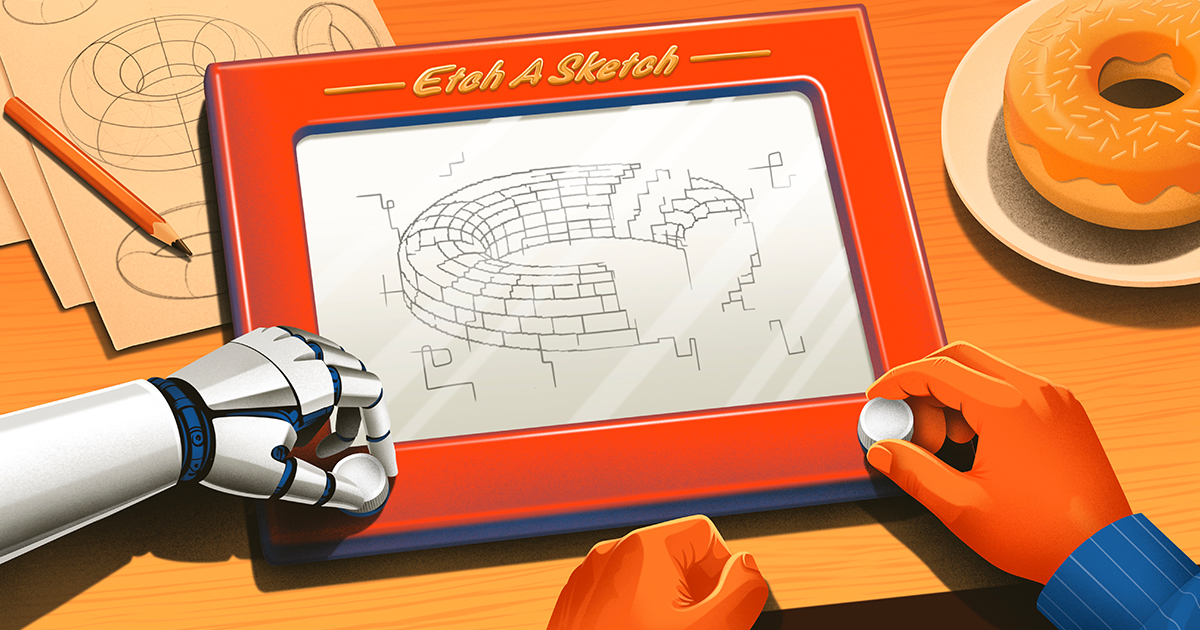
The most profound news comes from the world of pure science, where Quanta Magazine reports that the “AI revolution in math” has officially arrived. Researchers using a system called AlphaEvolve have discovered surprising structures within permutation groups, suggesting that AI is no longer just a calculator but a partner in proving new results. This shift is mirrored in the consumer space by Google’s recent efforts to push its open-source capabilities. While many users focus on cloud-based giants, a new report highlights that Gemma 4 is running natively on Pixel devices, offering a “game-changing” free tool that operates without the need for an internet connection, effectively bringing lab-grade AI to the pocket.
In the corporate world, the focus is on productivity and seamlessness. Anthropic has released a beta add-in for Microsoft Word, placing its Claude model directly within the world’s most popular word processor. This isn’t just a simple copy-paste feature; the tool is specifically designed for legal contract review, with AI-generated edits appearing as native tracked changes. It is a clear sign that AI is becoming an embedded feature of professional workflows rather than a separate destination. Similarly, Samsung is expanding its One UI 8.5 beta to older Galaxy devices, which finally introduces an LLM-powered Bixby to a much wider audience, signaling the end of the traditional, limited voice assistant.
Hardware is also evolving to meet these software breakthroughs. Reports indicate that Apple is developing AI glasses intended to compete with Meta’s Ray-Ban collaboration. By moving the AI interface from the screen to the eyes, Apple appears to be betting on a future where “ambient” intelligence is always present. This push toward more intimate technology is even reaching the medical frontier, though the path forward remains debated. A recent analysis of Neuralink and the broader Brain-Computer Interface (BCI) field suggests the industry is pivoting. Instead of focusing on using thought to move a computer cursor—a task traditional AI can now handle with ease—researchers are increasingly using AI to restore human speech, turning neural signals directly into spoken words.
Even our security landscape is being rewritten by these tools. The latest weekly recap of cyber threats highlights how AI is now being used for vulnerability hunting, automating the search for critical flaws in software before they can be exploited. It is a reminder that the same technology helping us write legal briefs and solve math theorems is also the new front line in digital defense.
Today’s stories show that AI is graduating from a novelty to a utility. We are seeing it solve problems that were previously thought to be the exclusive domain of human intuition, from the abstract beauty of mathematics to the nuanced language of law. As these models move on-device and into our wearable accessories, the barrier between human intent and machine execution continues to dissolve.